Quiz: Forgetful with Tunnel Vision
Test your understanding of this case with 10 questions.
PATIENT DEMOGRAPHICS
59-year-old female
PRESENTING COMPLAINT
Progressive memory loss and personality change with increasing clumsiness, bumping into things. Visual acuity preserved at 6/5 in both eyes.
EXAMINATION FINDINGS
Visual Acuity: OD: 6/5, OS: 6/5
Pupils: Equal, reactive, no RAPD
Fundus: Optic discs and retinal examination unremarkable. Fundus examination shows no primary ocular pathology
INVESTIGATIONS
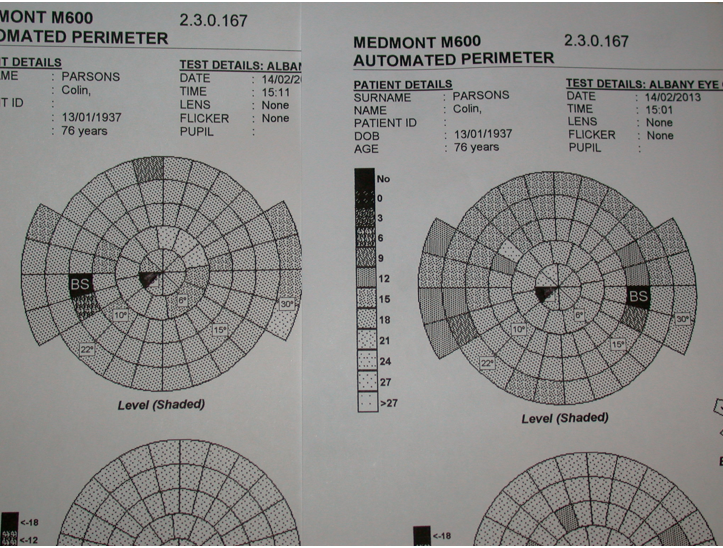
Automated perimetry showing bilateral constricted tunnel vision pattern - congruous bilateral field restriction
Visual Field Testing - Confrontation: Bilateral constricted visual fields detected on confrontation testing, suggesting tubular field restriction in both eyes. Despite excellent visual acuity, patient demonstrates severely restricted peripheral vision.
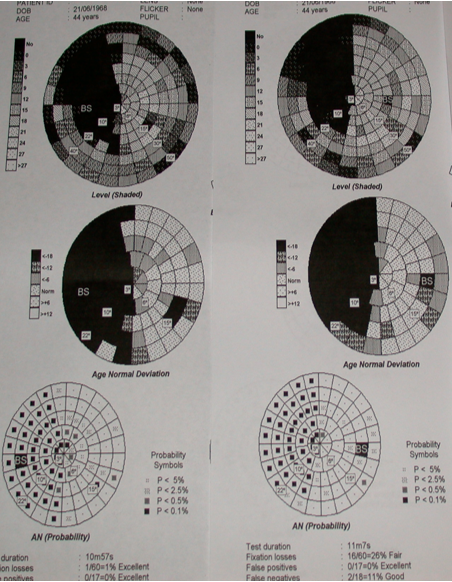
Detailed automated perimetry demonstrating bilateral tunnel visual fields with central island preservation
Automated Perimetry: Both eyes demonstrate severe concentric field constriction consistent with tunnel vision. The pattern is congruous and symmetric, affecting both eyes equally. Central vision preservation explains the maintained visual acuity.
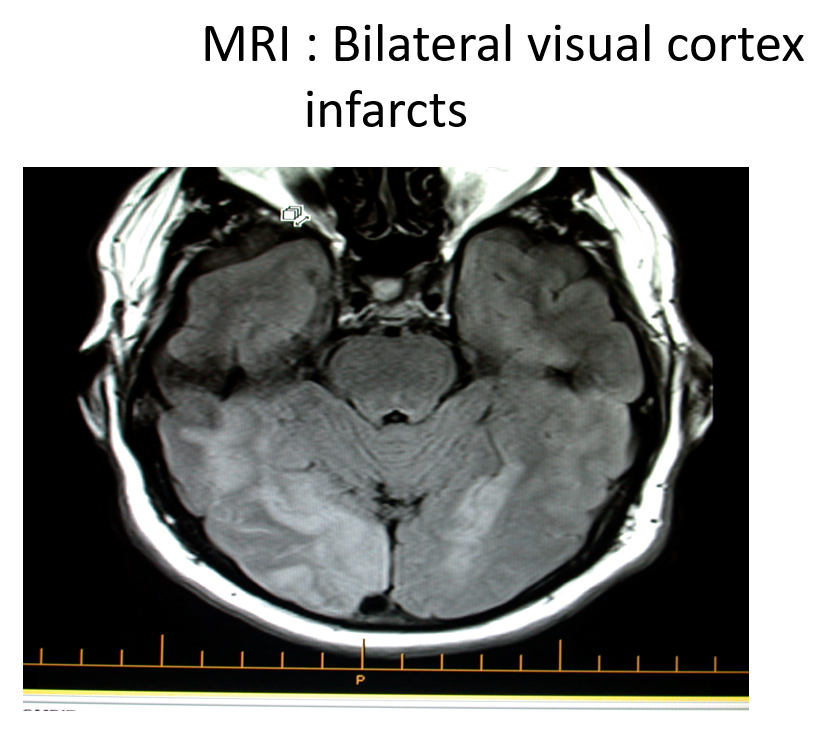
MRI brain (sagittal): Large frontal meningioma with oedema causing brain coning and bilateral occipital infarcts
MRI Brain (Sagittal View): Large frontal lobe meningioma with marked surrounding cerebral oedema. Secondary effects include coning of the brain with compression of posterior structures leading to bilateral occipital infarction. The mass effect and subsequent ischemic changes explain the bilateral visual field constriction.
Neurological Assessment: Comprehensive neurological examination reveals cognitive impairment, memory deficits, and personality changes consistent with frontal lobe compression. Visual symptoms are secondary to bilateral occipital cortex infarction from mass effect.